

Adding insulation to a steel building typically costs $1 – $3 per square foot for materials and labor combined, depending on the insulation type and R-value you choose. For a standard 40×60 ft building, that works out to $2,400 – $7,200 added on top of the base building cost — and most owners recover the investment within 2 – 4 years through lower energy bills.
If you’re searching for insulated steel building cost, you’re likely in one of three groups: a DIY homeowner, farmer, or small business owner planning a 30×40 to 60×80 structure and wondering if insulation is worth the extra investment; a commercial or industrial decision‑maker focused on long-term operational savings and payback period; or a first-time buyer simply researching whether insulated steel building is the right choice at all. This guide breaks down every cost factor, real-world price examples, and 20-year total cost comparison to answer your most important questions clearly and accurately. Then this article is for you!
This guide covers every cost factor you need to budget accurately: insulation types, R-value The R-value (Thermal Resistance) is an indicator used to measure the thermal insulation capacity of insulating materials. recommendations by use case, real-world price examples for the most popular building sizes, and a 20-year total cost comparison so you can see exactly whether insulation is worth it for your project.
| Building Size | Square Footage | Basic R-13 Fiberglass | Mid-Range R-19 Fiberglass | Premium Spray Foam (R-25+) |
|---|---|---|---|---|
| 30 × 40 ft | 1,200 sq ft | $1,200 – $2,400 | $1,800 – $3,600 | $3,600 – $7,200 |
| 40 × 60 ft | 2,400 sq ft | $2,400 – $4,800 | $3,600 – $7,200 | $7,200 – $14,400 |
| 50 × 100 ft | 5,000 sq ft | $5,000 – $10,000 | $7,500 – $15,000 | $15,000 – $30,000 |
| 60 × 120 ft | 7,200 sq ft | $7,200 – $14,400 | $10,800 – $21,600 | $21,600 – $43,200 |
Note: Prices reflect installed cost (materials + labor) for walls and roof. Prices are in USD and may vary by region and contractor. Always get at least 3 quotes for your specific project.
Most buyers focus on the upfront price tag and forget to calculate the total cost of ownership. Here is a side-by-side comparison for a typical 40×60 ft steel workshop in a four-season climate — the most common use case for this building size.
| Cost Item | No Insulation | R-13 Fiberglass | R-19 Fiberglass | Spray Foam (R-25) |
|---|---|---|---|---|
| Upfront insulation cost | $0 | $2,400 – $4,800 | $3,600 – $7,200 | $7,200 – $14,400 |
| Est. monthly energy cost | $350 – $500 | $200 – $300 | $160 – $250 | $120 – $200 |
| Est. annual energy savings vs. uninsulated | — | $1,800 – $2,400 | $2,280 – $3,000 | $2,760 – $3,600 |
| Payback period | — | 1 – 2 years | 1.5 – 2.5 years | 2 – 4 years |
| Total 20-year cost (energy + insulation) | $84,000 – $120,000 | $50,400 – $76,800 | $42,000 – $67,200 | $36,000 – $62,400 |
Energy savings estimates based on average U.S. utility rates and a 2,400 sq ft steel building in a mixed climate zone. Your actual savings will vary based on location, usage, and energy prices.
The numbers make a clear case: even the cheapest insulation option cuts your 20-year running cost roughly in half. The higher the upfront insulation investment, the lower your total cost of ownership over the life of the building.
Many first-time buyers treat insulation as a luxury upgrade. It is not. Steel is one of the best thermal conductors in construction — meaning it transfers heat and cold extremely efficiently. An uninsulated steel building is essentially a giant radiator in summer and an icebox in winter. But the bigger problem is Condensation Condensation is the process by which a substance changes from a gaseous state to a liquid state. It typically occurs due to a decrease in temperature or an increase in pressure, causing gas molecules to lose energy and clump together to form small droplets. .
When warm, moist air inside the building meets the cold steel surface, moisture condenses directly onto the metal — the same way a cold glass sweats on a humid day. Over time, this condensation causes:
Proper insulation eliminates condensation by keeping the steel surface temperature above the dew point. This is why most reputable steel building manufacturers strongly recommend insulating even buildings used only for storage.
Not all insulation is the same, and the right choice depends on your budget, climate, and how you plan to use the building. Here is an honest comparison of the four most common options.
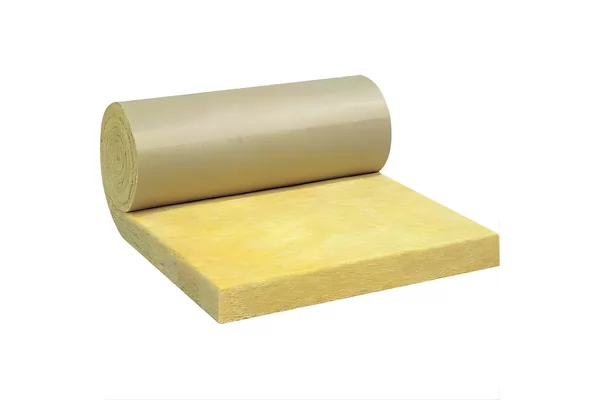
The standard choice for steel buildings. Fiberglass blanket insulation is installed between the roof purlins and wall girts, with a facing (usually white vinyl) visible on the interior. It is the most affordable option and can be installed by a skilled DIYer on smaller buildings.
| Specification | Detail |
|---|---|
| R-value per inch | R-3.0 to R-4.3 |
| Material cost | $0.50 – $1.50 per sq ft |
| Installed cost | $1.00 – $2.75 per sq ft |
| Available R-values | R-6, R-10, R-13, R-19, R-25, R-30 |
| DIY-friendly? | Yes, for experienced DIYers |
| Vapor barrier included? | Yes (faced version) |
| Best for | Workshops, garages, agricultural buildings, storage |
One watch-out: standard fiberglass batts must be installed carefully to avoid gaps. Any gap — even a small one — creates a path for air infiltration that significantly reduces real-world performance. Always use the faced (vinyl-wrapped) version designed specifically for metal buildings, not standard residential batts.
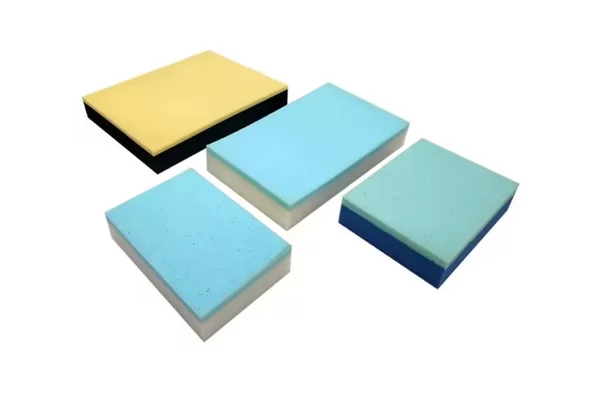
Rigid foam panels are installed on the outside of the wall framing, creating a continuous insulation layer that eliminates thermal bridging (heat leaking through the steel frame itself). They are particularly effective in cold climates where the steel frame acts as a "thermal highway" for heat loss.
| Specification | Detail |
|---|---|
| R-value per inch | R-5.0 to R-6.5 |
| Material cost | $0.90 – $1.50 per sq ft |
| Installed cost | $1.50 – $3.00 per sq ft |
| DIY-friendly? | Moderate — panel cutting and sealing required |
| Vapor barrier? | Separate vapor barrier recommended |
| Best for | Cold climates, high-performance commercial buildings |

Spray foam — especially closed-cell — delivers the highest R-value per inch and creates a complete air and vapor barrier in a single application. It is the preferred choice for buildings in extreme climates or those requiring climate control (server rooms, cold storage, offices inside steel shells).
| Specification | Detail |
|---|---|
| R-value per inch (closed-cell) | R-6.0 to R-7.0 |
| R-value per inch (open-cell) | R-3.5 to R-4.0 |
| Installed cost (closed-cell) | $1.50 – $4.00 per sq ft |
| Installed cost (open-cell) | $0.44 – $1.50 per sq ft |
| DIY-friendly? | No — requires professional equipment and training |
| Vapor barrier? | Yes (closed-cell acts as its own vapor barrier) |
| Best for | Cold storage, offices, climate-controlled spaces, extreme climates |
Important caveat: open-cell spray foam in humid climates can trap moisture against the steel surface and accelerate corrosion. In the Southeast U.S. or other high-humidity regions, specify closed-cell foam only, or discuss vapor management with your contractor before proceeding.
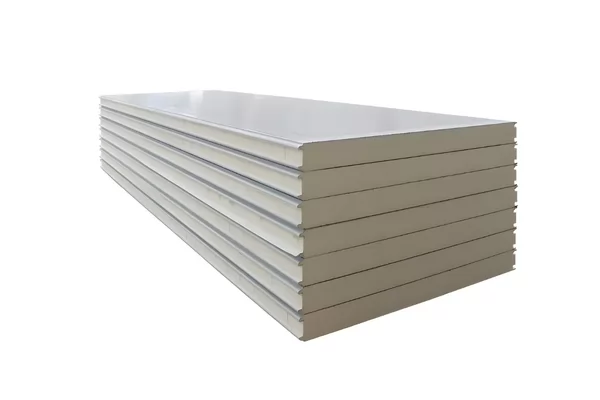
Structural Insulated Panels (SIPs) combine the wall panel and insulation into a single factory-built component. They are used on premium steel buildings where maximum energy performance is required from day one — cold storage facilities, food processing plants, and high-end commercial buildings.
| Specification | Detail |
|---|---|
| R-value typical | R-25 to R-42 depending on thickness |
| Installed cost | $8 – $12 per sq ft (wall panels) |
| DIY-friendly? | No — requires specialized installation crew |
| Best for | Cold storage, food processing, high-end commercial |
Use this decision guide based on how you plan to use your building:
| Use Case | Recommended Type | Minimum R-Value | Why |
|---|---|---|---|
| Basic storage / occasional use | Fiberglass R-13 | R-13 roof / R-10 walls | Controls condensation; lowest cost |
| Workshop / garage (heated in winter) | Fiberglass R-19 | R-19 roof / R-13 walls | Year-round comfort; reasonable energy costs |
| Commercial / retail (occupied daily) | Fiberglass R-25 or rigid foam | R-25 roof / R-19 walls | Code compliance; staff comfort; energy costs |
| Residential living space | Closed-cell spray foam or SIPs | R-30+ roof / R-21+ walls | Building code; comfort; moisture control |
| Cold storage / food production | Insulated metal panels (SIPs) | R-40+ | Tight temperature control; regulatory compliance |
| Server room / data center | Closed-cell spray foam | R-25+ | Air sealing critical; no moisture tolerance |
The U.S. Department of Energy divides the country into 8 climate zones. The colder your zone, the higher the R-value you need to meet code and maintain comfortable interior temperatures cost-effectively.
| Climate Zone | Representative States | Minimum Roof R-Value | Minimum Wall R-Value |
|---|---|---|---|
| Zone 1–2 (Hot) | Florida, Hawaii, South Texas | R-13 | R-10 |
| Zone 3 (Warm) | Georgia, Alabama, Arizona, California (south) | R-19 | R-13 |
| Zone 4 (Mixed) | Virginia, Tennessee, Kansas, Oregon (coast) | R-25 | R-13 to R-19 |
| Zone 5 (Cool) | Ohio, Pennsylvania, Colorado, Illinois | R-30 | R-19 |
| Zone 6 (Cold) | Minnesota, Wisconsin, Montana, Maine | R-38 | R-19 to R-25 |
| Zone 7–8 (Very Cold / Arctic) | Northern Minnesota, Alaska | R-49+ | R-25+ |
These are minimum recommended R-values for commercial steel buildings. Residential and food-grade applications may require higher values per local building codes.
Retrofitting insulation into an existing uninsulated steel building costs significantly more than adding it during initial construction. Here is why, and what to budget:
| Insulation Type | New Construction (installed) | Retrofit (existing building) | Cost Premium for Retrofit |
|---|---|---|---|
| Fiberglass blanket | $1.00 – $2.75/sq ft | $2.50 – $5.00/sq ft | +80% – +150% |
| Rigid foam board | $1.50 – $3.00/sq ft | $3.00 – $6.00/sq ft | +80% – +100% |
| Closed-cell spray foam | $2.00 – $4.00/sq ft | $2.50 – $5.00/sq ft | +25% – +50% |
Bottom line: if you are planning a steel building and think you might want insulation in the future, add it now. The cost savings of installing insulation during construction versus retrofitting it later typically pay for the upfront insulation cost within 12 – 18 months.
Adding insulation to the base cost of your steel building gives you the complete picture. Here are realistic all-in budgets for the most popular building sizes, including the building kit, foundation, installation, and R-19 fiberglass insulation (the most popular choice for workshops and light commercial use):
| Building Size | Base Building (kit + installation) | Foundation (concrete slab) | R-19 Insulation (installed) | Total Estimated Budget |
|---|---|---|---|---|
| 30 × 40 ft (1,200 sq ft) | $32,000 – $48,000 | $4,800 – $9,600 | $1,800 – $3,600 | $38,600 – $61,200 |
| 40 × 60 ft (2,400 sq ft) | $57,600 – $103,200 | $9,600 – $19,200 | $3,600 – $7,200 | $70,800 – $129,600 |
| 50 × 100 ft (5,000 sq ft) | $115,000 – $215,000 | $20,000 – $40,000 | $7,500 – $15,000 | $142,500 – $270,000 |
| 60 × 120 ft (7,200 sq ft) | $172,800 – $309,600 | $28,800 – $57,600 | $10,800 – $21,600 | $212,400 – $388,800 |
These are full turnkey estimates. Prices vary significantly by region, site conditions, building configuration, and the contractor market in your area. Always obtain multiple written quotes before committing to a budget.
Several variables can move your insulation budget up or down significantly:
Yes — even for pure storage. Condensation control alone justifies insulation in almost every climate. Without it, moisture condenses on the cold steel walls and drips onto stored items, causing rust, mold, and damage. Even a basic R-10 vapor-retarding insulation system is worth the investment if you are storing anything of value.
On a smaller building (under 2,000 sq ft), a competent DIYer can install faced fiberglass blanket insulation with the right safety equipment (gloves, eye protection, respirator) and basic tools. On larger buildings, the scaffold and labor demands make professional installation more cost-effective. Spray foam always requires professional installation — the equipment and chemical handling are not DIY-friendly.
Yes, in most jurisdictions. Buildings with occupied space (workshops, offices, retail) are subject to energy codes that specify minimum R-values by climate zone. Insulation requirements are reviewed during the plan check process. Always confirm local requirements with your permit office before finalizing your insulation spec.
Properly installed fiberglass insulation in a steel building lasts 20 – 30 years under normal conditions. Closed-cell spray foam has an even longer service life and does not degrade or settle over time. The main enemies of steel building insulation are moisture infiltration (which causes fiberglass to lose its R-value), physical damage during building use, and pest activity in agricultural settings.
Significantly, yes. An insulated steel building commands a higher sale price and is considerably easier to sell than an uninsulated equivalent. Buyers factor in the cost of retrofitting insulation as a deduction from the offer price — typically more than the actual cost of the work, since buyers factor in the hassle premium.
For most buyers with a standard workshop or light commercial use case, R-19 fiberglass blanket insulation on the roof and R-13 on the walls offers the best balance of upfront cost, energy performance, and payback period. For a 40×60 building, this typically runs $3,600 – $7,200 installed and pays back within 2 – 3 years through energy savings.
Every steel building project is different. The final cost depends on your specific size, location, climate zone, intended use, and the contractor market in your area. The figures in this guide are reliable benchmarks for budgeting, but getting written quotes from at least 3 local suppliers and insulation contractors before finalizing your budget is strongly recommended.
When requesting quotes, make sure each contractor specifies: the insulation type, manufacturer, R-value, thickness, facing type, and whether the price includes vapor barrier and all penetration sealing — these details are commonly omitted from low-ball quotes and discovered only after the job is done.
If you want to know exactly how much your project will cost—or if you are unsure which insulation solution offers the greatest cost savings and highest return on investment—simply share your requirements with me. By providing details such as dimensions, intended use, location, and whether the project involves new construction or renovation, I can generate a realistic cost estimate tailored to your specific needs, helping you avoid blind price comparisons and unnecessary detours.
Your Name*
Your Email*
*We respect your confidentiality and all information are protected.

How much does an insulated steel building cost? From $1–$3/sq ft for insulation to full turnkey prices by size. Compare R-values, types & get accurate budgets.

Comparing prefabricated steel buildings vs concrete? This guide covers construction speed, cost, seismic performance, and which system suits your project.

Steel-framed buildings often have a lifespan exceeding 50 years. In this article, we will discuss the lifespan of prefabricated steel structures.