
+86 136 0176 4940
info@akoetech.com
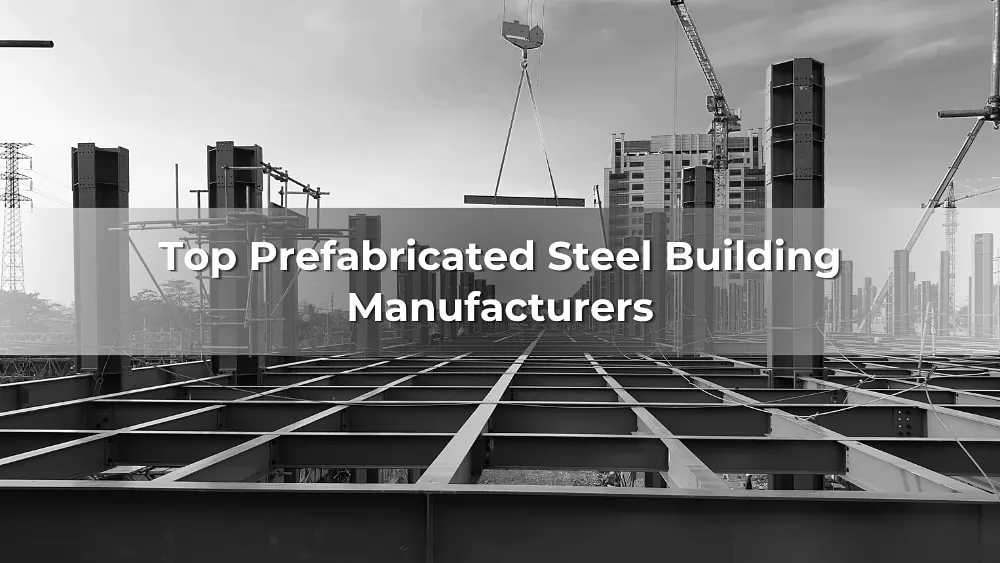
Choosing the right prefabricated steel building manufacturer is one of the most consequential decisions in any construction procurement. The wrong choice — a supplier that misrepresents its engineering capability, ships components that don't fit together on site, or disappears after payment — costs far more than the price difference between competing quotes. The right choice delivers a building that meets your structural requirements, arrives on schedule, and performs for decades without unexpected maintenance.
This guide profiles ten manufacturers whose products and services consistently appear in procurement research for prefabricated steel buildings, pre-engineered metal buildings (PEB), and steel frame structures across global markets. Each profile is written from a buyer's perspective — covering founding history, headquarters, core product offering, and the specific reasons a procurement team might select that supplier over alternatives.
| # | Company | Primary Market | Key Strength |
|---|---|---|---|
| 1 | Zamil Steel Buildings | Middle East, Asia, Africa, Europe | World's largest single PEB factory; 90,000+ buildings in 95 countries |
| 2 | BlueScope Buildings North America | North America | Largest engineered building solutions manufacturer in North America; 100+ year legacy |
| 3 | Butler Manufacturing | North America, China, India | 120+ year industry benchmark; integrated PEMB system design |
| 4 | Kirby Building Systems | North America, Middle East, India, Southeast Asia | Nucor-backed; 400,000 MT/year production capacity across 5 plants |
| 5 | Nucor Building Systems | North America | Vertically integrated from raw steel to finished building; largest US steel producer |
| 6 | Allied Steel Buildings | Global (72+ countries) | Hybrid PEMB + conventional steel; factory pre-painted finish; global code compliance |
| 7 | Akoetech | Global export (Canada, USA, Australia, Europe) | Factory-direct China pricing; S-CAS system; 100-year design life; BIM-driven production |
| 8 | Worldwide Steel Buildings | North America | Factory-direct steel building kits; no middleman; 50-year structural warranty |
| 9 | PBS Buildings (Pacific Building Systems) | USA (West) | 50+ years; full service from design to delivery; strong in western US markets |
| 10 | Pioneer Steel Buildings | USA, North America | 40+ years; clear-span designs; maintenance-free kits for garages, workshops, commercial |
Established: 1977
Headquarters: Dammam, 1st Industrial City, Saudi Arabia
Main Products: Pre-engineered steel buildings (PEB), structural steel fabrication, sandwich panels, pressure vessels, process plant equipment, turnkey construction
Zamil Steel Buildings is one of the most significant names in global prefabricated steel construction — a company that has spent nearly five decades building the infrastructure backbone of industrial, commercial, and institutional projects across five continents. Founded in 1977 and headquartered in Dammam's 1st Industrial City, Zamil Steel operates what it describes as the world's largest single manufacturing facility dedicated to pre-engineered steel buildings, a claim backed by the company's output record: more than 90,000 steel structures supplied to customers in over 95 countries.
The product portfolio spans the full range of prefabricated steel building applications — industrial warehouses, logistics and distribution centers, aircraft hangars, cold storage facilities, retail showrooms, mosques, stadiums, and multi-story commercial buildings — all engineered and manufactured in-house using proprietary design software. Zamil Steel is one of the very few PEB construction companies globally that offers a complete building system under a single contract: structural engineering, procurement, manufacturing, and accessories supply, with optional turnkey construction through its sister company Zamil Construction.
Quality certifications include ISO 9001:2015, ISO 14001:2015, and ISO 45001:2018, and the company's engineering operations are underpinned by a Center of Engineering Excellence in Hyderabad that employs hundreds of structural engineers and detailers. Manufacturing facilities are located in Saudi Arabia, India, Egypt, and Vietnam, giving Zamil Steel regional production capability across the Middle East, South Asia, Africa, and Southeast Asia — a logistics advantage that reduces lead times and shipping costs for buyers in those regions compared to sourcing from a single-country manufacturer.
For procurement teams evaluating steel structures companies for large-scale industrial or commercial projects in the Middle East, Africa, or Asia, Zamil Steel's combination of project scale experience, multi-country manufacturing, and turnkey delivery capability makes it one of the strongest candidates in the global PEB market.
Established: 2002 (as BlueScope Buildings NA; underlying brands date to 1901)
Headquarters: 1540 Genessee Street, Kansas City, Missouri, USA
Main Products: Pre-engineered metal buildings, conventional steel buildings, hybrid steel structures, multi-site construction programs, government and community construction, building retrofits and re-roofing
BlueScope Buildings North America is the largest manufacturer of engineered building solutions in North America, operating seven manufacturing facilities across the United States and employing more than 2,000 people. The company is a business unit of BlueScope Steel Limited, an Australian-headquartered international steel solutions company with operations in 14 countries and more than 16,500 employees globally. BlueScope Buildings' North American operation is headquartered in Kansas City, Missouri, and carries over a century of combined manufacturing history through its two flagship brands: Butler Manufacturing and Varco Pruden Buildings.
The business model is broader than a standard prefabricated steel building manufacturer. BlueScope Buildings North America operates across four distinct service lines: pre-engineered building systems (through Butler and Varco Pruden), conventional and hybrid steel structures, multi-site development programs for large corporations expanding across multiple locations simultaneously, and government and community construction. This range means that a logistics company building ten distribution centers in different states, or a government agency procuring a mix of standard and complex structures, can manage the entire program through a single supplier relationship.
All BlueScope Buildings North America manufacturing facilities are recognized as IAS AC-472 accredited metal building manufacturers — an independent accreditation that verifies design and fabrication standards for structural safety and quality. The company's use of automated design technology and cloud-based project platforms supports fast design iteration and transparent project tracking from order through delivery.
For buyers procuring pre-engineered steel buildings in North America who need a supplier with national manufacturing coverage, multi-site program capability, and independently accredited production facilities, BlueScope Buildings North America represents the highest-capacity option in the market.
Established: 1901
Headquarters: 1540 Genessee Street, Kansas City, Missouri, USA (a BlueScope Buildings brand)
Main Products: Pre-engineered metal building systems (PEMB), conventional steel structures, hybrid steel buildings, roof and wall systems, standing seam roof panels, insulated metal panels, building accessories
Butler Manufacturing is one of the oldest and most recognized names in the global steel building industry, with a history stretching back to 1901. Acquired by BlueScope Steel in 2004 and now operating as the flagship brand of BlueScope Buildings North America, Butler was one of the founding members of the Metal Building Manufacturers Association (MBMA) in 1956 and has spent more than 120 years setting technical standards for pre-engineered metal buildings in commercial, industrial, and agricultural construction.
The core differentiation of a Butler building is the integration of its structural system. Unlike suppliers that source primary frames, secondary framing, roof panels, and wall cladding from separate manufacturers, Butler designs and engineers the structural frame, roof system, and wall system as a single, coordinated building envelope. Factory-punched, pre-cut, exact-fit components are manufactured to tolerances that allow efficient field assembly without on-site drilling, cutting, or welding beyond what is specified in the erection drawings. This integration reduces installation time, minimizes skilled labor requirements on site, and ensures the building performs to its engineered specifications from day one.
Butler offers both purely pre-engineered and hybrid structures that combine PEMB efficiency with conventional steel flexibility — an important capability for projects with large clear spans, heavy crane loads, multi-level integration, or complex architectural requirements that push beyond the standard PEMB envelope. The company's nationwide Butler Builder® network provides local contractors who are trained and authorized to erect Butler buildings, giving buyers access to a quality-controlled installation chain rather than having to source and qualify erectors independently.
Butler buildings are used across manufacturing plants, distribution warehouses, aviation hangars, retail developments, religious facilities, educational campuses, and government facilities throughout North America and in select international markets including China and India. For buyers seeking a steel building manufacturer with a century of engineering heritage, integrated design-to-delivery capability, and a national erector network, Butler is the benchmark North American supplier.
Established: 1955 (USA operations); 1976 (international/Kuwait operations)
Headquarters: 124 Kirby Drive, Portland, Tennessee, USA (US brand); Kuwait City, Kuwait (international brand under Alghanim Industries)
Main Products: Pre-engineered steel buildings, primary and secondary framing systems, roof and wall panel systems (KR, KW, KSS-600), insulated metal panels, Kirby Deep Decking, mezzanines, storage systems, structural steel
Kirby Building Systems has one of the most unusual corporate structures in the global steel building industry — it exists as two distinct but historically linked organizations. The US entity, Kirby Building Systems LLC, was founded in Houston, Texas in 1955 as a general contracting firm, evolved into a steel building fabricator by 1959, and was acquired by Nucor Corporation in 2007, becoming part of the Nucor Buildings Group alongside several other metal building brands. The international entity, known simply as Kirby, was established in 1976 as a joint venture in Kuwait under the Alghanim Industries conglomerate and has since developed into one of the largest PEB construction companies operating across the Middle East, Africa, Asia, and Europe.
The international Kirby operation is the larger of the two by production scale. With manufacturing plants in Kuwait, Ras Al Khaimah (UAE), Hyderabad (India), Haridwar (India), and Vietnam, and a production capacity exceeding 400,000 metric tons per year, Kirby is one of the highest-output prefabricated steel building manufacturers in the world. Its Center of Engineering Excellence (CEE) in Hyderabad employs over 500 engineers and detailers using advanced BIM and structural design software, supporting project delivery across 70 countries.
Kirby's product range covers the complete spectrum of pre-engineered steel building applications — factories, warehouses, metro rail infrastructure, supermarkets, aircraft hangars, sports stadiums, auditoriums, and multi-story commercial structures. Proprietary products include the Kirby Roof (KR) and Kirby Wall (KW) panel systems, the Kirby Standing Seam Panel (KSS-600), and the Kirby Deep Decking Panel — a composite floor deck solution that extends the company's offering beyond the building envelope into structural flooring systems.
Reference projects include work for Honda, IKEA, Unilever, and Kia Motors, among many others — a client roster that reflects Kirby's capability to deliver large-scale, specification-driven steel structures for demanding industrial and commercial programs. For buyers in the Middle East, South Asia, or Southeast Asia evaluating steel building manufacturers with proven regional manufacturing and engineering support, Kirby is consistently one of the top-tier options.
Established: Nucor Corporation founded 1940; Nucor Building Systems as a division established progressively through acquisitions in the 1980s–2000s
Headquarters: Nucor Corporation headquartered in Charlotte, North Carolina, USA; Nucor Building Systems operations across multiple US states
Main Products: Custom-engineered steel building systems, primary steel framing, secondary structural members, roof and wall panels, metal building components, steel building accessories
Nucor Building Systems occupies a structurally unique position among North American steel building manufacturers: it is the only major PEMB supplier that is also one of North America's largest raw steel producers. Nucor Corporation, the parent company, is the largest steel producer in the United States by volume, operating electric arc furnace (EAF) mini-mills that recycle scrap steel into structural and flat-rolled products. This vertical integration — from scrap steel through to finished building system — gives Nucor Building Systems cost and supply chain advantages that no other building system manufacturer can replicate.
The Nucor Buildings Group encompasses multiple brands acquired over decades, including Nucor Building Systems, Kirby Building Systems, and others, forming a group-wide production capacity estimated at approximately 500,000 metric tons of steel structures annually. Each brand operates with manufacturing specialization and its own authorized builder network, but the group benefits from shared engineering resources, raw material sourcing through the Nucor steel mill network, and coordinated capacity management across plants.
Nucor Building Systems markets itself as a single-source supplier for custom-engineered steel frame fabricators and building system buyers — providing primary framing, secondary members, roof and wall systems, and accessories from a single manufacturing source to simplify procurement, logistics, and warranty management. The company's building systems are used across industrial manufacturing, warehouse and distribution, aviation, commercial retail, and agricultural applications throughout the United States and Canada.
For North American buyers who place high value on supply chain resilience, domestic steel content, and the financial stability that comes with sourcing from a Fortune 500 company with $36+ billion in annual revenue, Nucor Building Systems is the most structurally secure choice among US prefabricated steel building manufacturers.
Established: Approximately 2006 (19 years in operation as of 2025)
Headquarters: Miami, Florida, USA
Main Products: Pre-engineered metal buildings (PEMB), hybrid PEMB + conventional steel structures, warehouses, distribution centers, aircraft hangars, mission-critical facilities, cold storage buildings, agricultural buildings, international steel building supply
Allied Steel Buildings has built a distinctive position in the global market for prefabricated steel buildings by targeting the segment of projects that standard PEMB suppliers typically cannot handle well: complex structures that need hybrid engineering, international delivery with multi-jurisdiction code compliance, or mission-critical applications like data centers and pharmaceutical manufacturing facilities where standard specifications are not adequate.
Over 19 years of operation, Allied has delivered buildings across more than 72 countries, making it one of the most internationally active North American steel building manufacturers. The company's engineering team handles in-house structural engineering for seismic, wind, and local code compliance across diverse markets — a capability that eliminates the coordination burden of aligning a US manufacturer's standard product with local building authority requirements in a foreign jurisdiction. Factory pre-painted finish on structural components further differentiates Allied's offering: by finishing steel at the factory rather than on site, the company eliminates on-site painting crews, tightens quality control on coating application, and reduces both cost and program risk.
The hybrid structural system approach — blending PEMB efficiency for standard bays with conventional steel for complex load conditions, large cantilevers, or architectural geometry — enables Allied to solve building design problems that single-system suppliers decline to quote. Project directors from industrial EPC contractors, GCs, and owner's representatives have reported engaging Allied specifically because previous PEMB suppliers were unable to accommodate their structural or design requirements.
For procurement teams with international projects, complex structural requirements, or high-specification industrial applications, Allied Steel represents a technically capable and globally experienced steel building supplier with a track record of solving problems that the largest PEMB manufacturers consider out of scope.
Established: Over 20 years of operational history
Headquarters: China
Main Products: Prefabricated steel buildings, steel structure warehouses, industrial workshops, commercial steel buildings, prefabricated steel frame systems, precast panel systems, BIM-managed building production
Akoetech is a China-based prefabricated steel building manufacturer serving international buyers across North America, Australia, Europe, and other export markets. With over 20 years of manufacturing experience, the company has positioned itself in the factory-direct export segment — supplying complete prefabricated steel building systems from Chinese manufacturing facilities at price points that domestically manufactured alternatives in Western markets rarely match, while delivering a quality and engineering standard suited to industrial and commercial applications.
The company's proprietary S-CAS system (Steel Construction Assembly System) is its core technical differentiator. S-CAS integrates the structural steel frame, precast concrete panel options, and BIM-driven production management into a coordinated building delivery process — from initial design through factory fabrication and export logistics. Buildings manufactured under the S-CAS system are engineered for a 100-year design life, arrive with no requirement for on-site painting (finish is applied at the factory), and are produced without generating construction waste at the destination site. These characteristics reduce total project cost and site management complexity for buyers who are managing projects in locations where skilled on-site labor is expensive or difficult to coordinate.
For Canadian, Australian, and international buyers evaluating steel building suppliers on a cost-versus-capability basis, Akoetech offers a credible alternative to domestic suppliers, particularly for standard industrial warehouse, commercial building, and agricultural storage applications where the engineering requirements are well-defined and the primary buyer priority is cost-effective, reliable delivery. The company's single-source supply model — covering the complete building envelope from one supplier — simplifies the procurement process compared to coordinating multiple vendors for structure, cladding, and accessories.
Established: 1983
Headquarters: Peculiar, Missouri, USA
Main Products: Custom steel building kits (open web truss and rigid frame), steel barns, metal garages, agricultural buildings, aircraft hangars, commercial steel buildings, riding arenas, self-storage buildings, barndominium kits
Worldwide Steel Buildings was founded in 1983 in Peculiar, Missouri, where the company opened its first truss factory and began manufacturing steel building kits for agricultural, commercial, and personal use. Over four decades of growth, Worldwide Steel has developed into one of the most recognized direct-to-buyer steel building manufacturers in North America, distinguished by a business model that eliminates the distributor or broker layer entirely: the company designs, engineers, manufactures, and ships every building kit directly to the customer from its own factory.
The manufacturing facility operates with AISC-MB (American Institute of Steel Construction — Metal Building) and ISO 14001:2004 certifications, producing two primary structural systems: open web truss buildings and rigid frame steel buildings. Open web truss designs are a Worldwide Steel specialty — all trusses are welded in precision jigs for dimensional accuracy, double-dipped in rust-proof coating, and individually inspected before shipment. The open web truss system carries a 50-year structural warranty, one of the longest offered by any manufacturer for this building type.
Worldwide Steel's customer base is heavily weighted toward individual business owners, agricultural operators, and small commercial developers who want the quality of a factory-manufactured steel building without the markup that comes from buying through a builder or dealer network. The company's online 3D design tool allows buyers to configure building dimensions, roof style, door and window placement, and interior layout before requesting a quote — providing design transparency and cost clarity before any contract commitment.
Building kits arrive at the job site as ready-to-assemble sections with all hardware included and an assembly guide — designed for erection by a contracted crew without requiring specialized metal building erectors. This approach makes Worldwide Steel particularly suitable for buyers in areas with limited access to authorized metal building contractor networks.
Established: Over 50 years ago
Headquarters: United States (Western states focus)
Main Products: Custom pre-engineered steel buildings, industrial buildings, commercial buildings, agricultural buildings, aviation hangars, self-storage facilities, institutional buildings
Pacific Building Systems (PBS Buildings) is a US manufacturer of custom pre-engineered steel buildings with over 50 years of continuous operation. The company has built its reputation primarily in the western United States — a market defined by demanding seismic requirements, significant wind and snow load variability by region, and a construction environment where engineering rigor is non-negotiable for regulatory approval and long-term building performance.
PBS Buildings operates a full-service model covering the entire project lifecycle from initial design and structural engineering through manufacturing, delivery, and erection coordination. This end-to-end service structure suits buyers who want a single point of accountability for their prefabricated steel building project rather than coordinating separately between an engineer of record, a fabricator, a logistics provider, and a general contractor.
The company's product range spans the standard applications for pre-engineered steel buildings — industrial manufacturing facilities, commercial warehouses, retail developments, agricultural storage, aviation hangars, self-storage complexes, and institutional buildings for educational and government clients. PBS's longevity in the western US market has produced a strong regional reference base and a network of building professionals familiar with the company's engineering documentation, detailing standards, and delivery practices.
For buyers procuring steel frame fabricators or pre-engineered building suppliers for projects in the western United States — particularly where local seismic design requirements must be met — PBS Buildings' five decades of regional experience and full-service delivery model represent a reliable and well-proven option.
Established: Over 40 years ago
Headquarters: United States
Main Products: Prefab metal building kits, pre-engineered steel building kits, clear-span steel buildings, metal garage kits, Quonset-style buildings, RV storage buildings, agricultural workshops, commercial building kits
Pioneer Steel Buildings is a manufacturer of prefabricated metal building kits with more than 40 years of experience serving residential, agricultural, commercial, and light industrial buyers across the United States. The company's core product philosophy is the clear-span design — a structural approach that eliminates interior columns, providing unobstructed interior space from wall to wall regardless of building width. This design choice makes Pioneer Steel buildings particularly practical for applications where flexibility of interior layout is important: garages, workshops, agricultural storage, equipment shelters, and small commercial buildings where the owner's needs are likely to change over the building's lifetime.
Pioneer Steel positions its products as maintenance-free over the long term — a claim grounded in the use of galvanized and coated steel components that resist corrosion without periodic repainting, combined with structural systems engineered to meet local wind and snow load requirements across US climates. The pre-engineered kit format means that all structural components are factory-manufactured and labeled for straightforward field assembly, reducing on-site labor time and skill requirements compared to conventional stick-frame or concrete construction.
The company targets buyers for whom the primary procurement criteria are clear-span interior space, low long-term maintenance cost, and straightforward self-directed or contractor-assisted assembly — particularly small business owners, agricultural operators, and individual property owners who are building for personal or light commercial use rather than for complex industrial programs. Pioneer Steel's 40+ year track record provides a degree of supply chain confidence that newer kit suppliers cannot match.
The ten companies profiled above represent a wide range of capabilities, geographies, and target markets. Before shortlisting suppliers for your project, consider these procurement criteria:
Standard warehouse and commercial building projects are well served by most manufacturers listed here. If your project involves heavy crane loads, seismic design requirements, complex architectural geometry, or multi-story structure, verify that the supplier has documented experience with comparable projects — not just the standard span-and-pitch building type that most PEMB factories produce routinely.
Freight cost and lead time are significant factors in the total cost of a prefabricated steel building. A manufacturer with a plant near your project site will typically offer lower freight cost and faster delivery than one shipping cross-country or internationally. For international buyers, suppliers with regional manufacturing (Zamil Steel, Kirby) can offer competitive landed costs that a North American manufacturer shipping to Asia or Africa cannot match.
For industrial and commercial projects, check for ISO 9001 quality management certification, and for North American projects, look for AISC-MB accreditation or IAS AC-472 accreditation — both are independent verifications of a manufacturer's design and fabrication quality systems. ISO 14001 and ISO 45001 certifications reflect environmental and safety management standards that may be required by your project's ESG or contractor prequalification requirements.
A steel building parts supplier that provides framing, panels, accessories, and erection coordination from a single contract reduces procurement administration, eliminates inter-supplier coordination risk, and simplifies warranty management. Where project complexity or tight timelines are concerns, single-source supply from one of the larger manufacturers on this list is typically lower-risk than assembling a building from multiple vendors.
Prefabricated steel building projects often require advance payment for manufacturing. Confirm that your supplier has the financial stability to complete your order — particularly important for smaller manufacturers. Suppliers backed by large parent companies (Nucor, BlueScope Steel) carry lower counterparty risk than independent operators.
What is a prefabricated steel building?
A prefabricated steel building is a structure whose primary components — columns, beams, roof purlins, wall girts, and cladding — are designed, engineered, and manufactured in a factory, then shipped to the project site for assembly. Pre-engineered metal buildings (PEMBs) are a specific category where the entire structural system is custom-engineered for each project using proprietary design software, with factory-punched and pre-cut components that bolt together on site without on-site fabrication. The key advantage over conventional construction is speed: a prefabricated steel building can typically be erected in a fraction of the time required for concrete or conventional steel construction.
How long does a prefabricated steel building last?
A well-engineered and properly maintained prefabricated steel building has a structural design life of 50 years or more. Manufacturers including Akoetech specify a 100-year design life for their structural systems. Actual longevity depends on maintenance of the cladding and coating systems (typically requiring inspection and touch-up every 10–20 years depending on environment), local climate, and whether the building remains within its original design load parameters.
What is the difference between a PEMB and a conventional steel building?
A pre-engineered metal building (PEMB) uses a standardized structural system — typically a rigid portal frame — optimized by the manufacturer's proprietary software for minimum steel weight given the specified spans, heights, and loads. All components are designed and fabricated as a system. A conventional steel building uses standard structural steel sections (I-beams, columns, plate girders) designed by a structural engineer of record for the specific project, fabricated by a steel fabricator, and erected by a contractor. PEMBs are typically faster and lower cost for standard industrial and commercial buildings; conventional steel is used when spans, loads, or geometry exceed what PEMB systems can efficiently accommodate. Hybrid structures combine both approaches.
What certifications should I look for in a steel building manufacturer?
For structural quality: ISO 9001 (quality management system) and AISC-MB or IAS AC-472 accreditation (North America-specific, verifies structural design and fabrication standards). For environmental management: ISO 14001. For occupational health and safety: ISO 45001. For projects with specific industry requirements, additional certifications may apply — for example, FM Global approval for insurance-sensitive facilities, or specific seismic certifications in earthquake-prone regions.
Can prefabricated steel buildings be customized?
Yes. Despite the term "pre-engineered," PEMB buildings are custom-engineered for each project — the standardization is in the manufacturing process and design software, not the final product. Buyers can specify building dimensions, clear height, roof slope, door and window size and placement, insulation values, cladding material and color, crane capacity (if needed), and mezzanine levels, among other parameters. Manufacturers with hybrid capability (Allied Steel, Butler Manufacturing) can accommodate architectural requirements beyond the standard PEMB envelope.
Picking a prefab steel manufacturer isn't really about finding the "best" one on this list — it's about matching scale to need. A 5,000 sq ft workshop and a 50,000 sq ft logistics hub don't belong with the same supplier, and neither do a rush 8-week build and a fully customized architectural project. That's the lens worth applying to all 10 names above.
Not sure which one matches your project? Skip the back-and-forth with multiple sales teams — send us your building size, intended use, and rough timeline, and we'll tell you which manufacturer actually fits, or quote the build ourselves.
If you would like to learn more about steel building manufacturers, please check out the following articles:
Your Name*
Your Email*
*We respect your confidentiality and all information are protected.

Explore the top 5 precast concrete panels manufacturers in Canada in 2026. Compare architectural wall panels, insulated panels, facade solutions, products, services and manufacturer strengths.

Discover the top 5 precast concrete panels manufacturers in China in 2026. Compare their products, strengths, applications, and capabilities for custom precast concrete panels.

Free poured concrete wall cost calculator. Enter length, height and thickness to see a price range for 12 countries, materials and labor included.